An heritage samurai blade stands a magnificent display of technique, but how about you strive for to show your separate flair? Tailoring your blade is a enriching journey, allowing you to forge a truly rare piece. From the grip wrapping and fastening to the guard design and tempering curve, each aspect offers a chance for personalization. This investigation delves into the territory of katana alterations, providing guidance for both learners and seasoned enthusiasts aiming to form their legacy on the long-standing art of the samurai.
1060 Steel Katanas: The Beginner's Legitimate Mastery
For those prepared to embark on the beneficial journey of samurai sword fighting , 1060 steel katanas furnish an excellent entry point. This particular grade of elemental steel obtains a sweet spot between cost and capability . While not reaching hard as higher-end steels, 1060 enables a acceptable level of cutting preparation , making it beneficial for beginners to practice the core principles of edge management and understand the attractiveness of authentic Japanese weaponry. It’s a wonderful choice for developing experience without the investment burden of more complex steels.
Type T10 Cutting Tools : Managing Functionality and Expense
Providing for connoisseurs seeking an authentic armament experience without overwhelming the capital constraint , T10 fabrication katanas represent a inviting option. These cutlery offer a clear improvement in sturdiness compared to basic alternatives, exhibiting sufficient edge retention and ample flexibility for elementary cleaving techniques. While not rivaling the outstanding characteristics of top-tier steels like T100 or folded metal , T10 provides a remarkable blend of power and profitability, making them a appreciated choice for rookies and those on a small financial .
Transcending the Edge : Enhancing Your Weapon's Accessories and Hilt
Even though the honed sharpened metal is undeniably the important point of a katana, truly improving its presence lies in the careful customization of its elements and shaft . This practice allows devotees to exhibit their distinct style . Weigh the broad possibilities: menuki - decorative decorations that bring visual appeal ; the hamon sheaths – often intricately chiseled; the tsuka heart itself, wrapped in conventional ito yarn; and the fusa pommel , which can be fabricated from various elements like valuables or ivory .
- Select designs that connect with you.
- Assess with diverse composites .
- Highlight merit for a permanent consequence.
The Charm of the Katana: Heritage, Workmanship, and Metal
Such Japanese sword contains a matchless allure, steeped in epochs of Far Eastern history and custom . More than merely a device of skirmishing, it's a embodiment of the soldier ethos – a fusion of skill and regulation . Its maturation spanned several generations, with early edges evolving into the sophisticated curvature and deadly edge we know today. The workmanship involved is truly spectacular, requiring decades of mentoring to become skilled in . The process involves a complex folding of forged iron , creating layers that boost the instrument’s flexibility and slicing ability. Multiple schools of crafting came about , each with their own secrets and methods for achieving the optimal symmetry and definition - a truly heavy pursuit.
- Early Katana shapes
- The purpose of the oriental sword in knight culture
- Conventional processing methods
Selecting the Best Steel for Your Bladed Weapon Project: 1060 vs. T10
Deciding on the ideal steel is vitally important for any armament project, and the option between 1060 and T10 can be complicated. 1060 is a prevalent American fabrication, offering a respectable balance of resilience and sturdiness, causing it moderately easy to handle. However, T10, a East Asian steel, commonly boasts improved wear longevity and can arguably achieve a more ultimate hardness, although it can be somewhat demanding to work with and tanto requires refined heat modifying. Consider your capability and preferred effects: for a first-timer, 1060 may be a easier starting point, while the master smith might admire the augmented features of T10.
- Convenience of Working
- Wear
- Terminal Tenacity
Accessing Excellence: Progressive Katana Alteration Approaches
Advancing competence in blade customization extends far beyond basic honing. Serious enthusiasts are now researching advanced techniques to truly unleash a blade's hidden potential. This includes intricate work with the temper rim, utilizing specialized ingredients for differential tempering and carefully opting for the form of the tsuba to optimize balance and functionality. Beyond purely functional changes, artisans are increasingly focused on achieving unparalleled aesthetic elegance, through complex carving and layered varnishes that truly transform a katana into a magnum opus.
Shaping Rough Steel into Perfection: Making a 1060 Sword
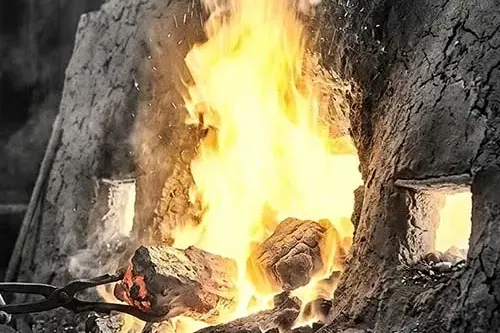
The journey starts with average 1060 metal , a solid material far distant the fine katana it will become . Proficient bladesmiths utilize a sophisticated process of combining and forming the crude steel, repeatedly annealing it and hammering it to clear impurities and fashion a steady grain structure. This arduous process, often extending for intervals , builds the necessary power and adaptability characteristic of a genuine Japanese armament . Follow-up heat methods , including deliberate hardening and tempering , are essential to achieve the targeted balance of sharpness, life and loveliness .- Uniting: Removes impurities and produces grain structure.
- Fabricating: Shapes the steel into the initial blade form.
- Annealing: Establishes the final hardness and flexibility.
The Persistent Magnetism of the Katana: Thorough Examination of Alloy and Modification
That time-honored katana survives a powerful symbol within Japanese tradition , its attraction far overtopping mere military gear. Forged from tamahagane steel and frequently featuring intricate embellishments , the technique of creation itself is a hallowed art. Beyond the crucial craftsmanship, the ability to alter a katana - from the temperation to the hold wrapping and sheath - facilitates for a truly individual expression for both enthusiasts and users alike. This blend of time-honored steelwork and boundless personalization results in the katana's continued prominence across the planet .
