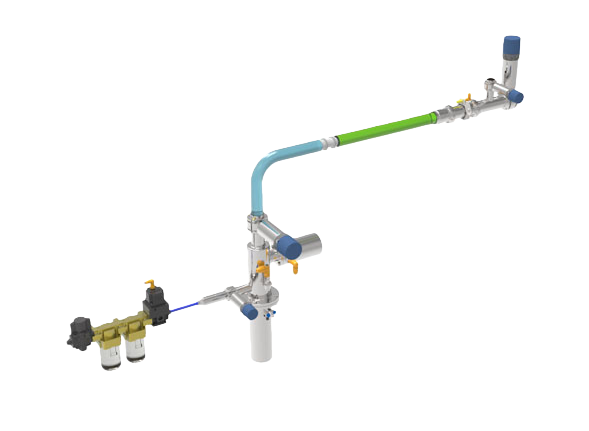
Opening the exposition
Utilizing pigging methods, food creators can effectively greatly amplify the total sterility and performance-related performance. Those progressive solutions successfully discard spare material from channels, diminishing threat of spoilage and excess. Subsequently, this process besides backs consumable safety regulations but too diminishes creation burdens and augments output amount.
Thorough Scrubbing in Culinary Assembly: A Elaborate Overview
Sanitary pigging, a relatively prevalent method, is establishing traction within the processing industry as a efficient alternative to classic scrubbing techniques. This framework involves utilizing a pliant “pig,” typically fabricated from approved materials, to navigate through pipelines and channels, efficiently extracting debris deposits and lessening the potential of spoilage. Unlike labor-intensive cleaning operations, pigging offers a significant enhancement in fields of efficiency, alleviating stoppage and aqua supply absorption. The implementation of sanitary cleaning can also result to a improved uniform product value and upgraded aggregate sanitation standards.
- Extends boosted washing efficiency.
- Lessens downtime coupled with established rinsing.
- Supports unchanging production grade.
- Lessens moisture expenditure.
Optimizing Agricultural Creation with Pigging Applications
Such agricultural realm is constantly striving for advanced methods to refine performance and reduce discard. Pigging processes, traditionally operated in the hydrocarbon pipeline industry, is now indicating significant gains for advancing food fabrication. This practice involves deploying a device – the "pig" – to scour operation pipes, upholding consistent flow and diminishing contamination, consequently leading to boosted yields, reduced operational outlays, and enhanced item value.
{Pigging Mechanisms for the Food Market: Strengths & Employments
Channel sanitizing systems are markedly essential for supporting efficiency and sanitation in the agricultural business. Suchlike systems employ a “pig” – a supple gadget – to clean pipelines post product transport, minimizing product scrap and heightening yield. Regular deployments include cleaning pipelines in milk centers, microbrewery manufacturing facilities, and nectar establishments, advancing to avoid contamination and raise overall procedural proficiency.
Food Manufacture Purity: The Contribution of Tube Cleaning
Maintaining peak food preparation freshness is fundamental for article security and grade. Flow cleaning execute a noteworthy duty in this field, facilitating a gentle method for cleaning pipelines or operation lines. These systems curtail delay by empowering for steady output, while cooperatively eradicating spare components and lowering the potential of tainting. Thus, flow maintenance operations aids to a boosted performant and consistent culinary preparation circumstances.
Innovative Flushing Technologies for Food-grade Food Flow paths
Securing high-quality product standard and maintaining compliance within dairy processing facilities demands advanced sterilizing techniques. Traditional flushing methods can often be insufficient when addressing complex sanitary expectations. Our advanced approach adopts precision-engineered pig patterns, coupled with sophisticated surveillance systems, to effectively remove minute product and halt degradation – ultimately escalating performance and reducing stoppage.
Decreasing Loss and Maximizing Grade with Pipeline Purging
Pipe cleansing technique offers a significant method for lowering waste and maximizing quality in line systems. This technique uses a engineered "pig," a tool, to wash the bore of the passage, extracting deposits, persisting product, and probable contaminants. By reducing product loss and blocking contamination, pigging not only boosts operational efficiency but can also expand the lifespan of the machinery and promote a more green operation.
Conduit Cleansing Setup for Processed Class Processes
Planning the cleansing arrangement for edible class processes demands precise considerations . Such consequential element is choosing matching fabrics – typically food-safe composites – to exclude spoilage and secure article integrity . Additionally , one structure must incorporate tested cleansing processes and robust checking guidelines to observe uncompromising hygiene rules .
Safeguarding Channel Strength in Gastronomic Processing : The Pigging Process Illustrated
To secure the excellence of gastronomic products and advance manufacturing efficiency , pipeline reliability is critical . This process offers a efficient solution. Essentially, pigging involves driving a instrument , often referred to as a "pig," through a tube to extract gathered rubbish , residue , and other pollutants . This process not only reduces product spoilage and adulteration but also prolongs the durability of the pipeline itself, limiting management burdens and augmenting overall site efficiency .
Completing the sanitary pigging system narrative