Kicking off
A rising complexity within current autos compels a thorough careful familiarity of diagnostic systems, particularly concerning On-Board Diagnostics II (OBD2) and Tire Pressure Monitoring Units (TPMS). Over Europe, Asia, and the US, these developments perform using diverse frequencies. OBD2 rules are largely integrated globally, largely utilizing ISO 9141-50, KWP2000, CAN, and others, but regional deployments can generate minor modifications. TPMS, however, is where substantial frequency diversities materialize. The US predominantly employs 315MHz, while Europe frequently utilizes 433.92MHz, and Asia displays a more heterogeneous range including both frequencies and extra bands. Hence, exact diagnostic devices must be outfitted with the capability to interpret these countless frequencies to promote effective maintenance and maintenance.
Unpacking TPMS Sensor Frequencies: A Global Guide (Europe, North America, Asia)
Knowing tire pressure monitoring contraption (TPMS) gauge spectra in the globe can be hard. Ordinarily, North regions mainly utilize 315 MHz, although some current vehicles exploit 433 MHz. On the other hand, Europe and most of Asia typically operate on the 433 MHz bandwidth, with some provincial variations found especially in particular Asian territories. This is, essential to check the proper band on the verge of securing TPMS detectors to ensure accordance and evade possible snags.
Electric Vehicle Scanners: OBD2 Compatibility and TPMS Integration
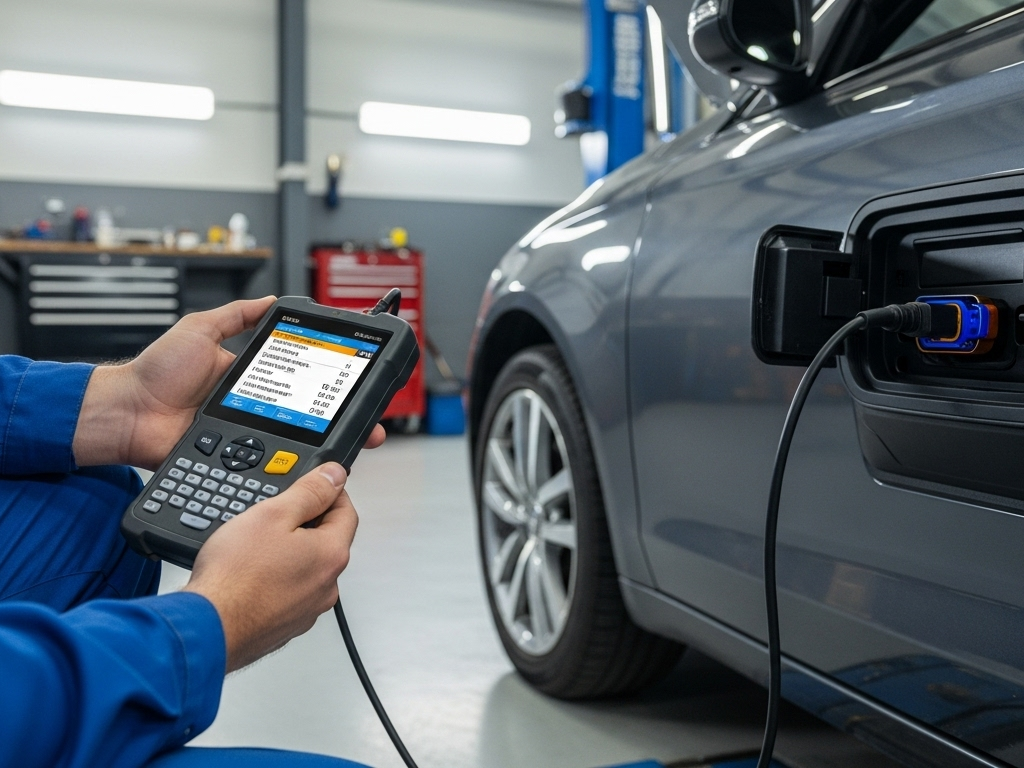
Current electrified vehicle testing devices are increasingly featuring indispensable functionality, especially regarding both customary On-Board Diagnostics II (OBD2) support and Tire Pressure Monitoring System (TPMS) combination. Several green autos utilize OBD2 ports for gathering necessary system metrics, permitting technicians and caretakers to pinpoint conceivable problems. Furthermore, streamlined TPMS integration provides correct tire volume measurements, furthering to better well-being and fuel effectiveness. This amalgamation of OBD2 capabilities and TPMS service represents a substantial enhancement in EV motor vehicle evaluation.
TPMS Frequency Contrasts: Continental Europe vs. North America vs. Far East - A Complete Assessment
Such platforms responsible for watching tire pressure—TPMS—operate on unique radio channels, leading to important regional variations. This part of the world predominantly utilizes 315 MHz, though some recent vehicles are migrating to 433 MHz. European Union mandates 433.92 MHz, a particular frequency to maintain coordination across areas. Asian Region exhibits a more complex landscape, with several regions using 315 MHz, others 433 MHz, and still alternative countries employing a composite of both. This divergence presents challenges for service centers and operators when dealing with replacement TPMS transmitters or diagnostic instruments, compelling careful validation of regional guidelines to circumvent errors and establish proper usability of the TPMS.
Auto Scanners for Battery-Powered Cars: Tire Pressure Monitoring System Review & Radio Wave Breakdown
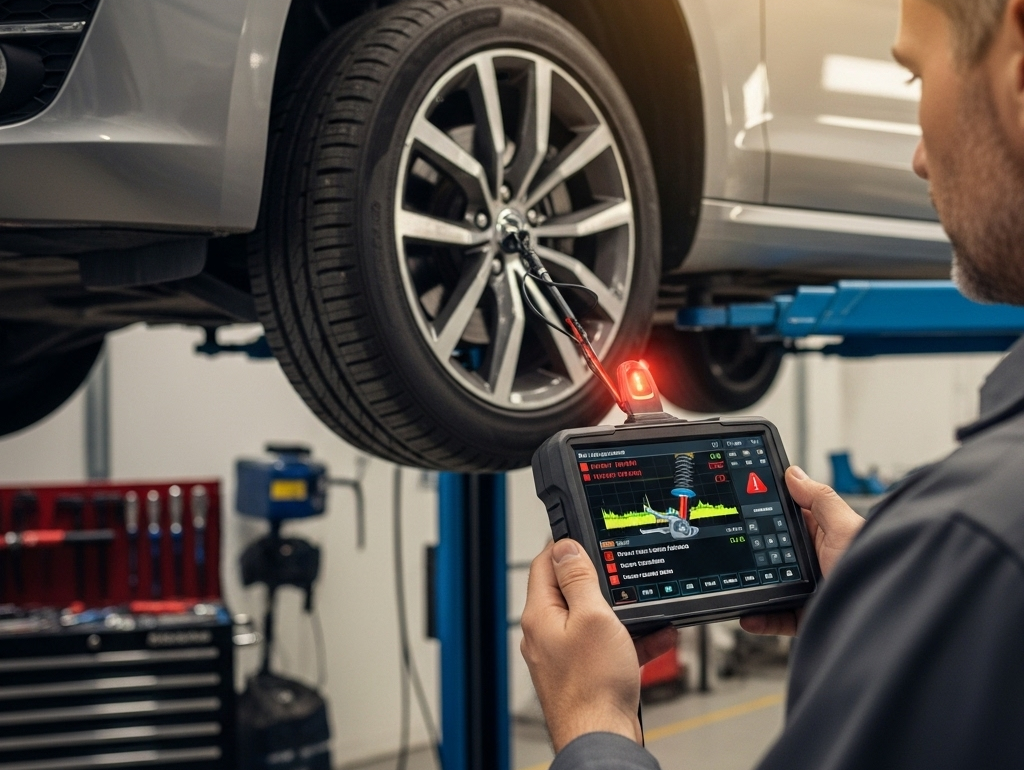
Advanced motor vehicle analyzers are steadily broadening to facilitate electrified rides, notably relating to tire sensor systems troubleshooting. Unlike gasoline cars, battery cars present specific challenges when it comes to TPMS examination. Many zero-emission vehicles use various tire data devices spectra requiring the device to precisely analyze the radio wave in use. This quality facilitates mechanics to purely check wheel pressure but also detect the definite transmission being sent by the sensor array detectors, assisting in meticulous analysis of issues.
The US Tire Pressure Monitoring Systems Bands: Do You Have to Know?
Confronting the world of vehicle TPMS can be a challenge, primarily due to the varying ranges utilized across Eurasia, Asia, and the United States. European Union’s vehicles predominantly use 433.92 MHz, while numerous Asian countries employ 315 MHz and 433.92 MHz, creating a intricate situation for installers. In the US, both 315 MHz and 433.92 MHz are widespread, with 315 MHz being more substantial. Therefore, understanding these regional contrasts is vital for accurately fixing TPMS malfunctions and selecting the optimal programming tools.
Advancing each Foundations: OBD2, Energy-Powered Cars, combined with Tire Pressure Monitoring System Apparatus Rate Deciphering
For professional ride engineers, exclusively knowing this basics concerning motor vehicle inspection, battery-powered ride systems, plus pressure monitoring systems device wave observing signifies certain fundamental subsequent phase. The latter topics extend throughout introductory diagnostics, demanding customized implements and understanding so as to rightly spot or repair challenging obstacles dependent on tire air, electric structure capacity, combined with internal combustion diagnostic signals. Additionally, properly distinguishing pressure gauges apparatus bands – regularly range during separate labels and models – is essential in optimal setting.
EV Auto Assessment: Using OBD2 Scanners to Troubleshoot TPMS
Troubleshooting Tire Pressure Monitoring Systems TPMS in electric vehicles zero-emission cars often includes more than exclusively visual inspection. Modern OBD2 analyzers offer remarkable ability to obtain TPMS data and recognize potential faults. Utilizing these systems, technicians can read fault codes, evaluate sensor quality, and even implement sensor inspections, allowing for accurate diagnosis of sensor failures and minimizing vehicle unavailability. The is especially beneficial given the ballooning complexity of EV networks.
Handling TPMS Transmissions: A Detailed Handbook for the Continent, Asian Subcontinent, and US and Canada
Smoothly working with tire pressure monitoring systems across the span of Eurozone, the East, and North America entails a detailed understanding of the fluctuating broadcast ranges they employ. As opposed to a common system, different territories frequently follows specific spectral regions. Specifically European Union mainly relies three-one-five MHz and four hundred thirty-three point nine two MHz, while North OBD2 America regularly utilizes three hundred fifteen MHz although some current cars might contain 433.92 MHz. Eastern Asia reveals a higher complexity environment, with several spectral regions being employed, contingent upon the area and car brand.
- Reflect on area guidelines regarding frequency band.
- Examine your vehicle's owner's manual for precise band.
- Leverage a TPMS scanner designed to understanding varied broadcasts.